NYU Shanghai Pocket Park
A Sustainability-Oriented Rooftop Design Integrating Lightweight Structures, Behavioral Design, and Community Engagement
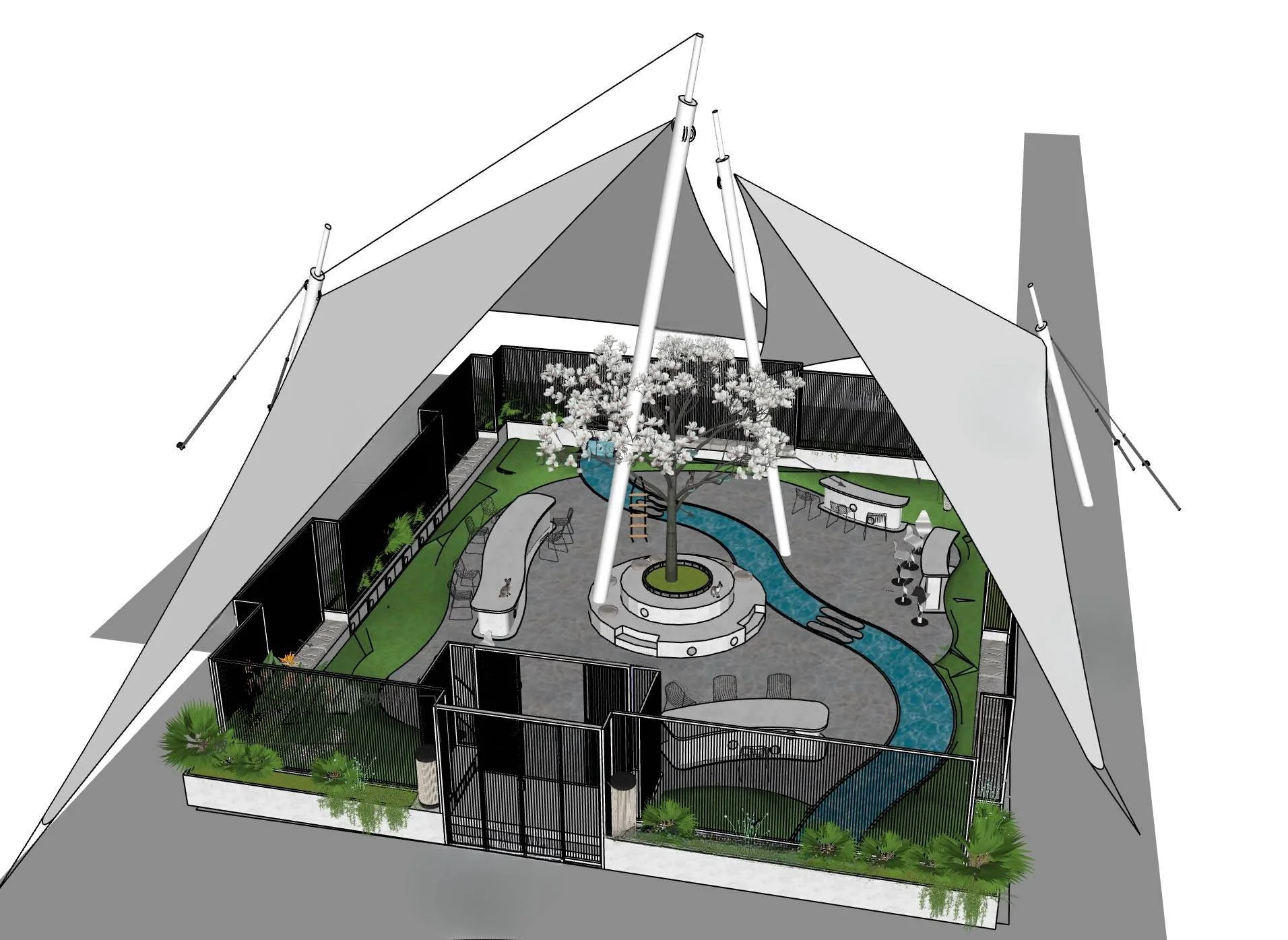
Project Snapshot
Context: Rooftop pocket park proposal for NYU Shanghai campus
Role: Co-designer (concept, spatial layout, sustainability strategy)
Focus: Human–animal interaction, lightweight structure, campus well-being
Tools & Skills: Conceptual design, spatial planning, 3D modeling
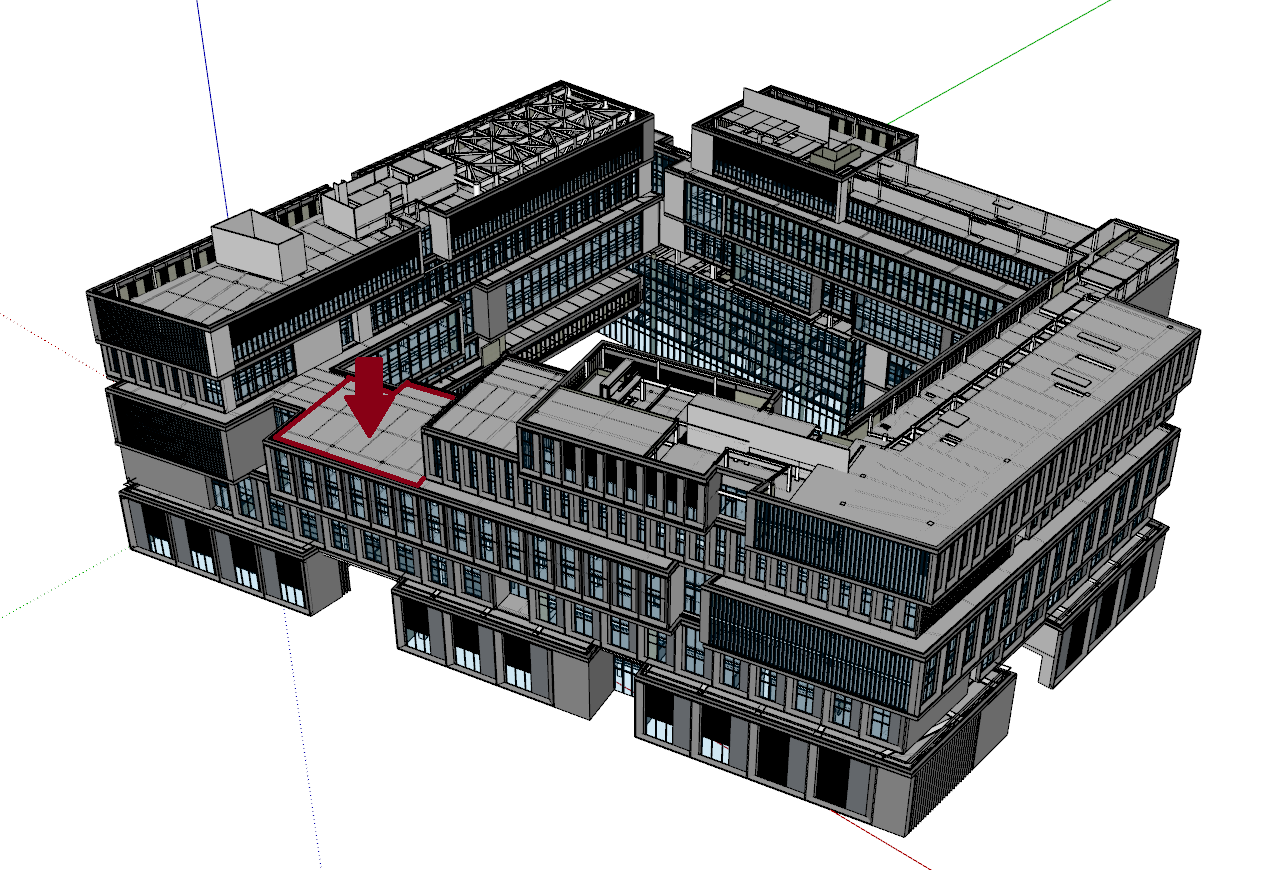
Problem & Motivation
Campus stray cats lack safe, centralized, and humane spaces for care and interaction.
Existing shelters are poorly located and discourage engagement.
At the same time, students lack stress-relief, nature-connected spaces on campus.
This project explores how intentional spatial design can support both animal welfare and human well-being.
Design Strategy
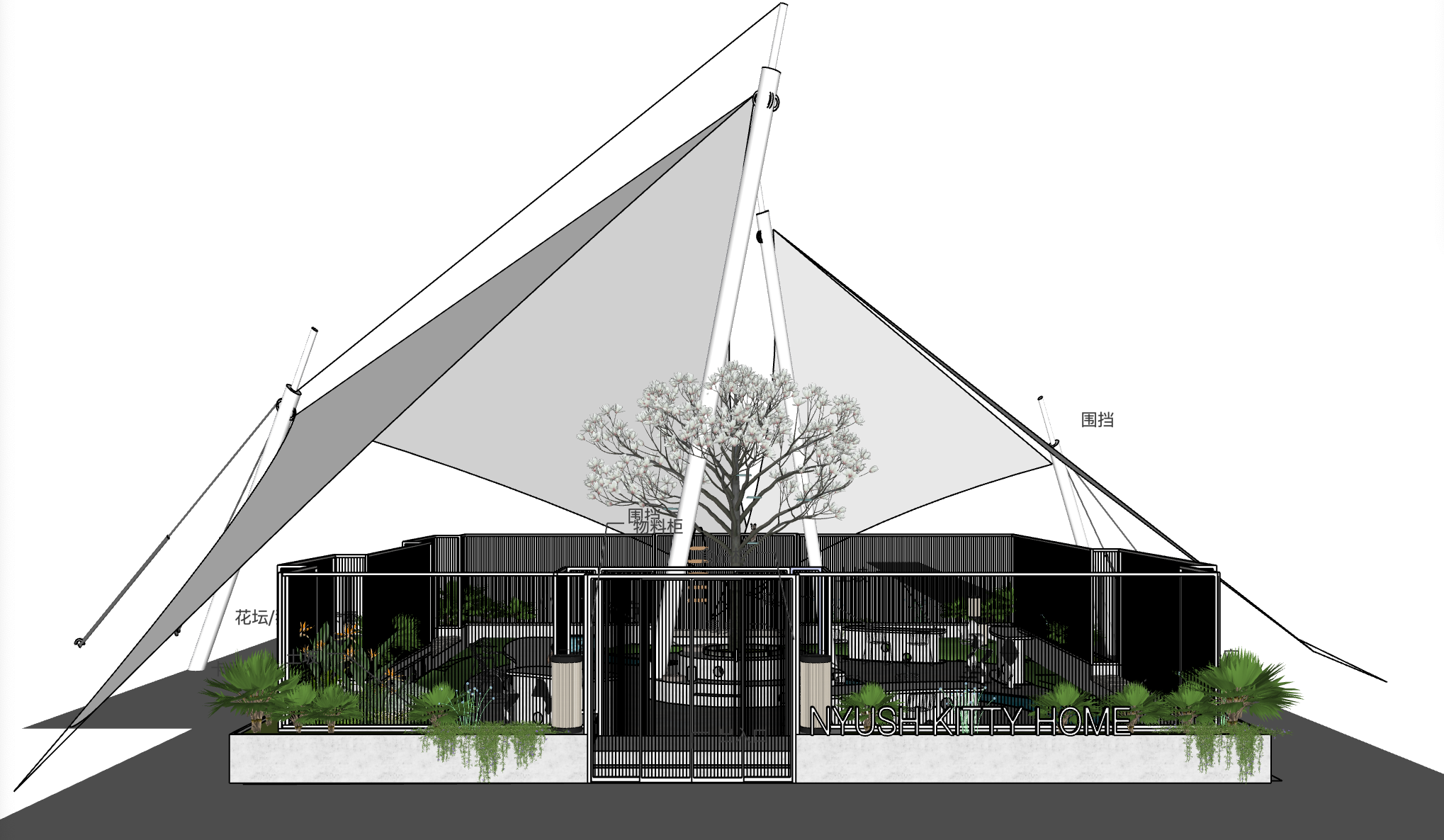
Lightweight & Reversible Structure inspired by Frei Otto’s tensile architecture
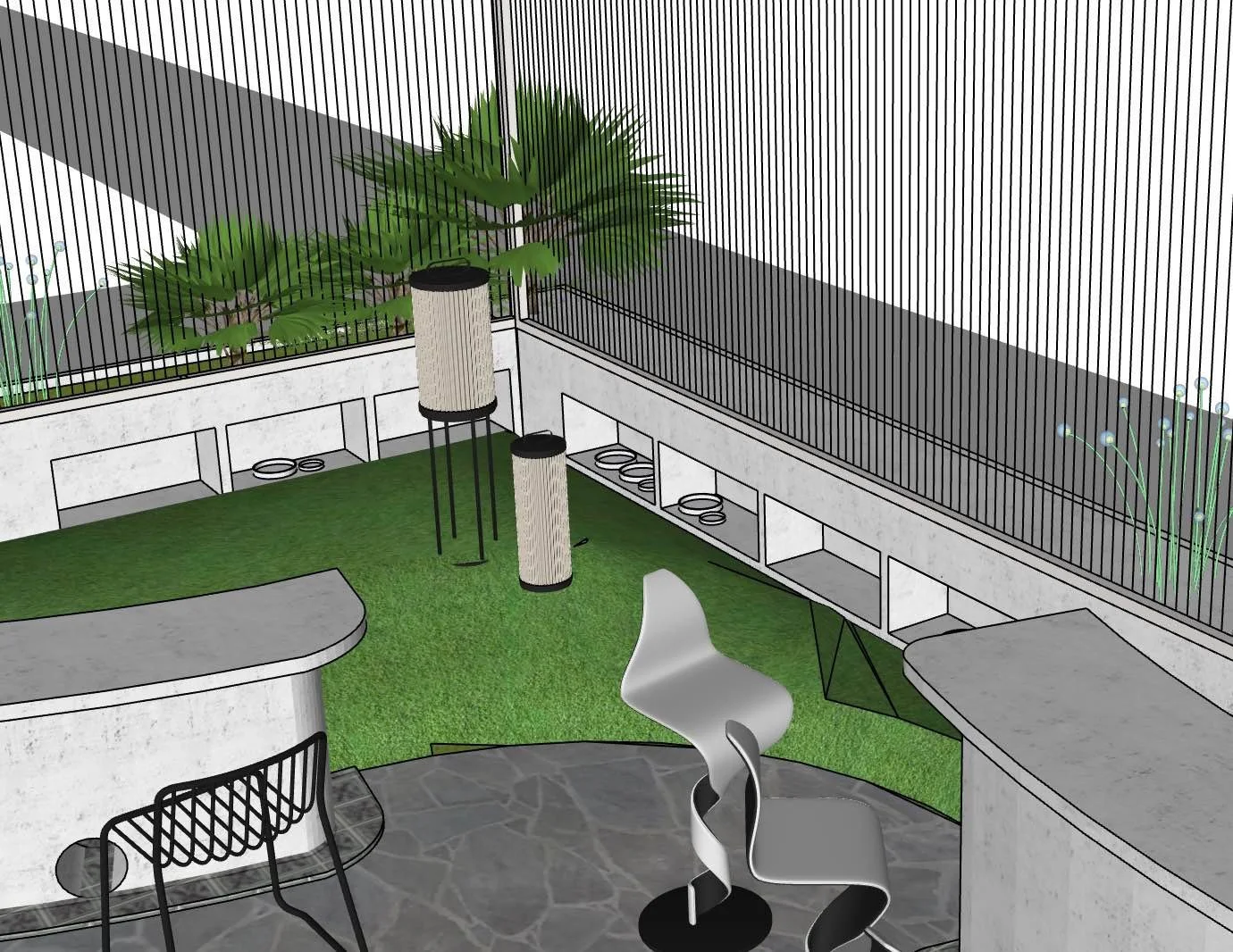
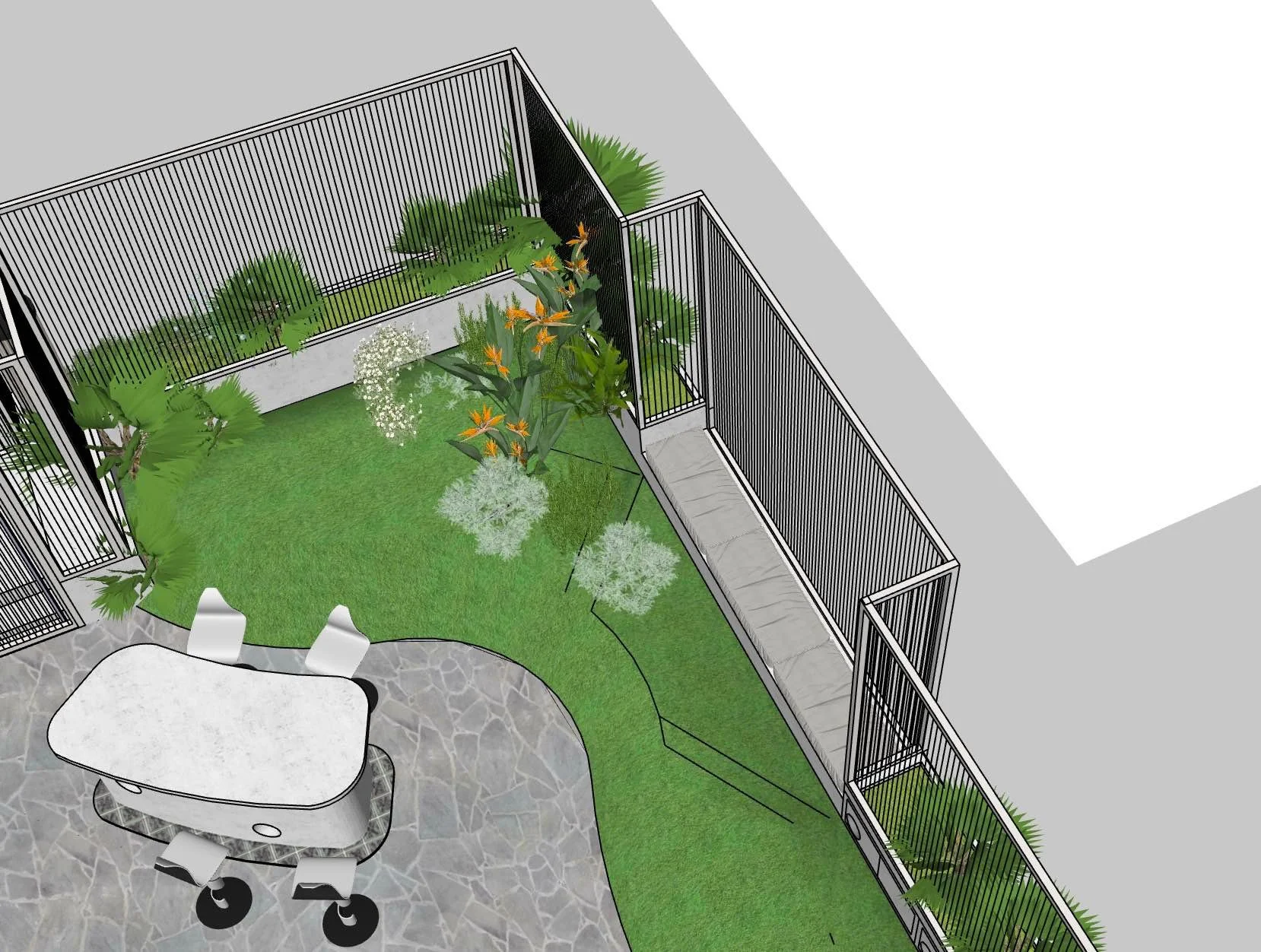
Behavior-Oriented Layout encouraging climbing, resting, hiding, and exploration
Semi-Outdoor Environment improving airflow, shade, and rainwater drainage
Low-Impact Sustainability through minimal materials and reusable structures
Key Design Features
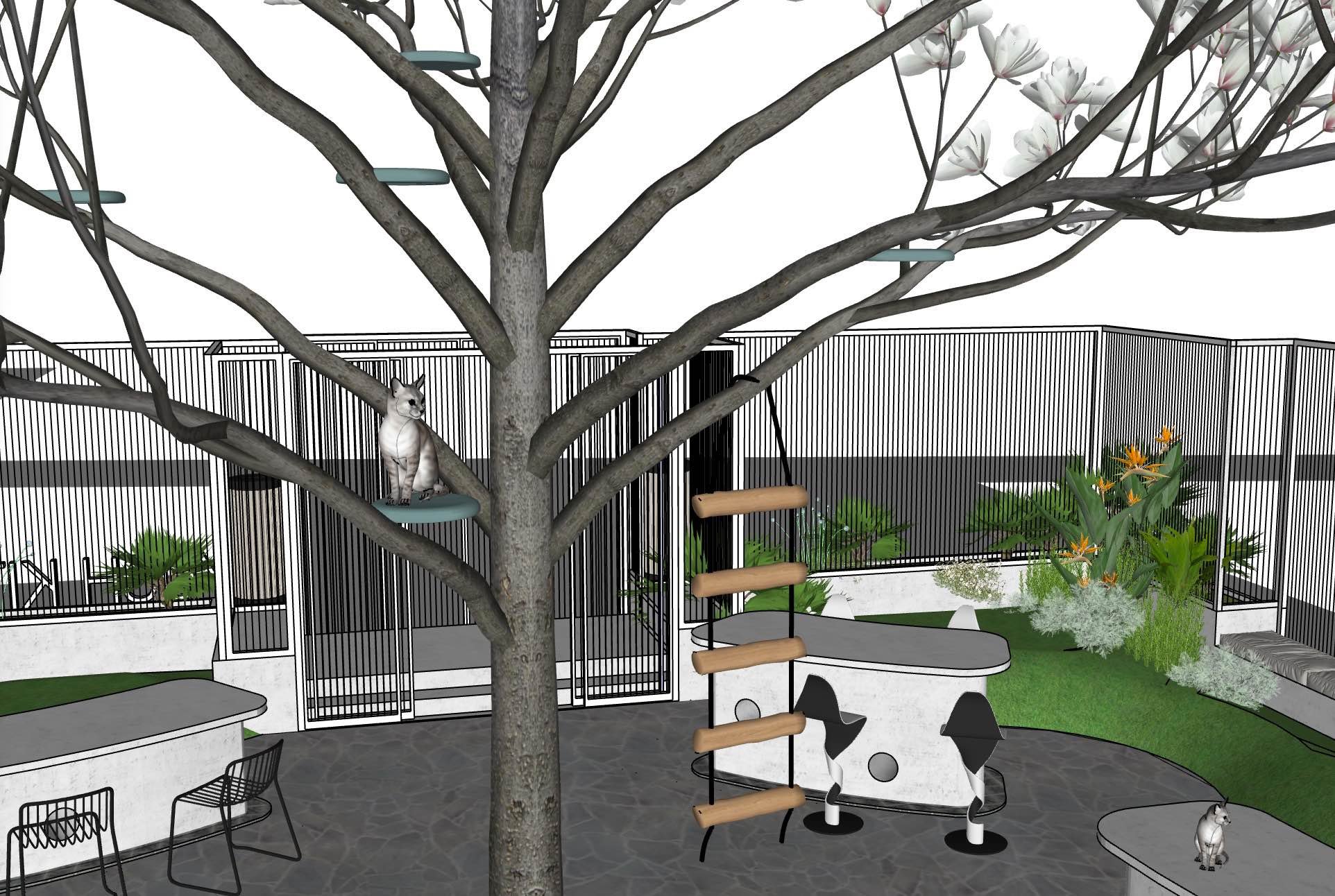
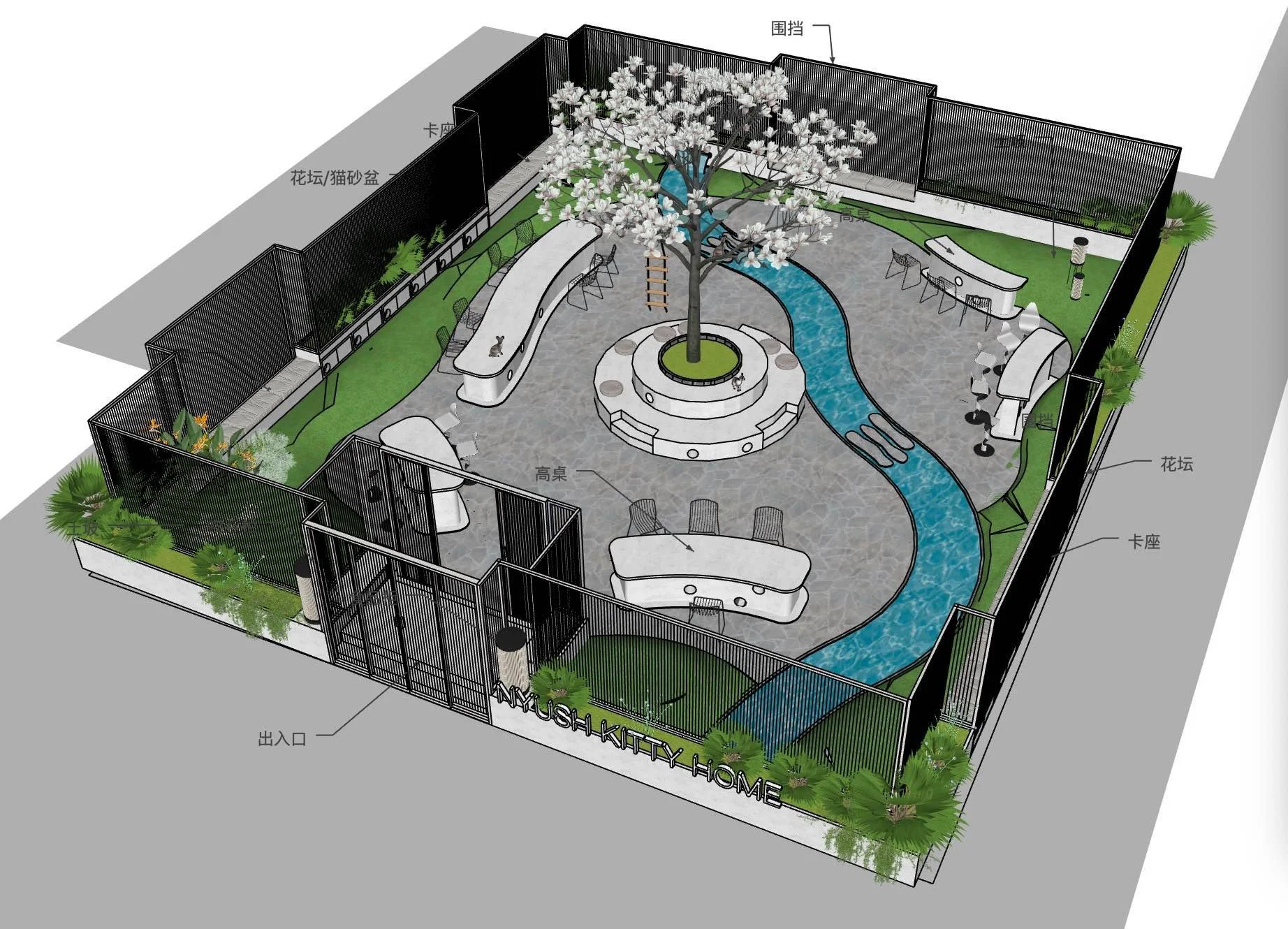
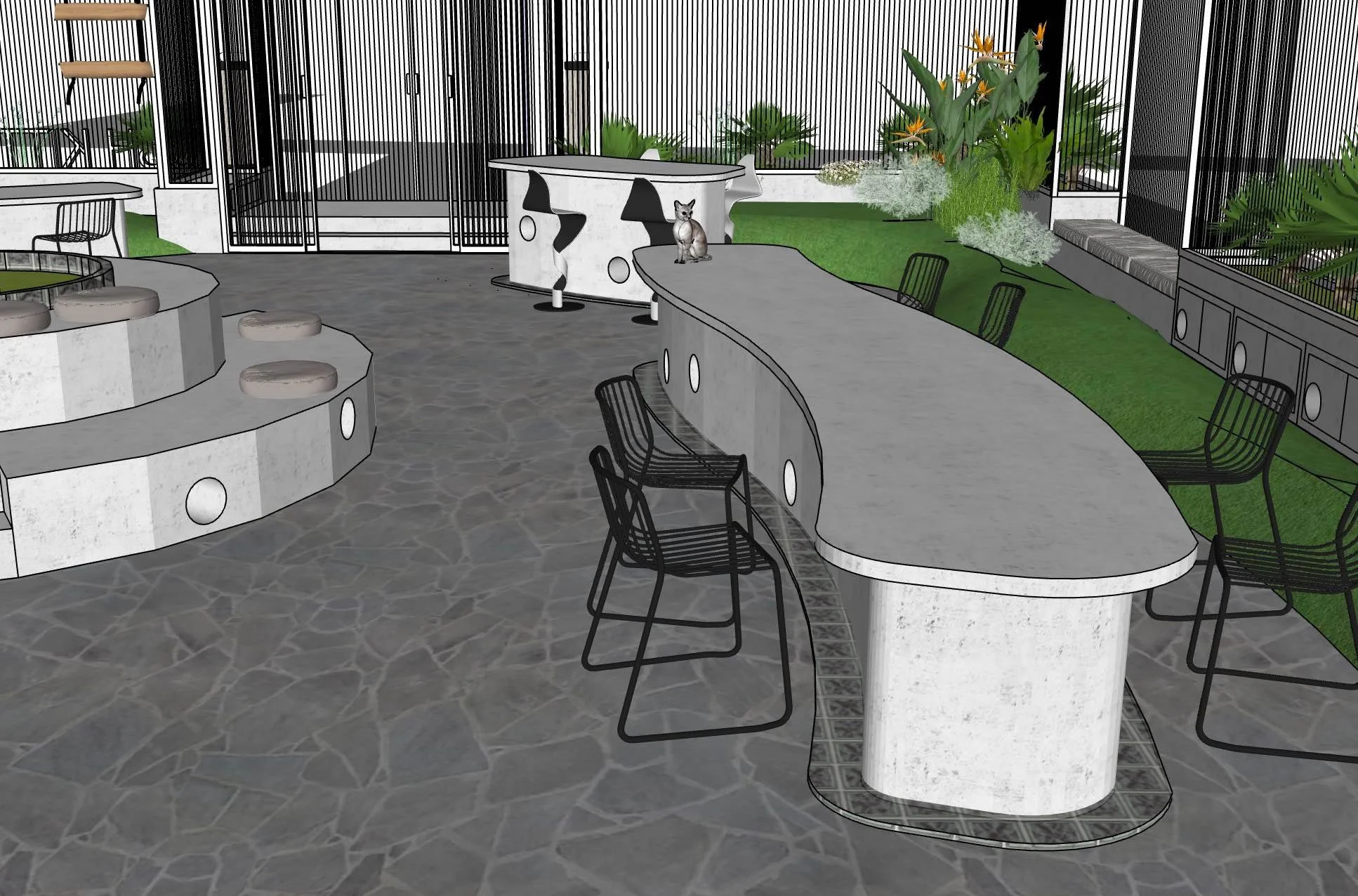
Central cat tree as spatial and behavioral anchor
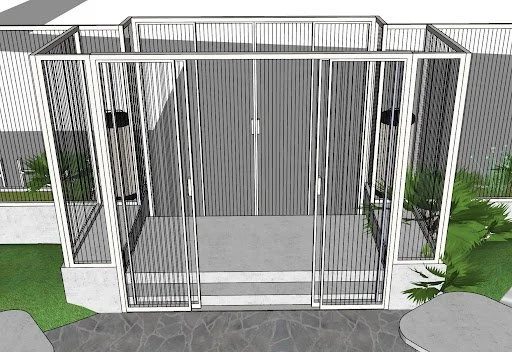
Double-layer entrance system ensuring safety and escape prevention
Integrated water and seating elements supporting both cats and humans
Invisible fencing balancing enclosure and openness
Green landscaping to enhance calmness and microclimate
Impact & Feasibility
Improves animal welfare through safer, centralized care
Creates a stress-relief, community-oriented campus space
Scalable model for humane, sustainability-oriented campus design
Supported by a phased operation plan (student volunteers, partnerships, long-term funding)