Drivers of Music Popularity
A genre-aware audio feature analysis
Project Overview
Objective
Identify audio characteristics associated with commercially successful music
Evaluate whether popularity signals remain robust after controlling for genre effects
Motivation
Explore what makes music commercially valuable beyond intuition
Provide data-driven insights to support content strategy and investment decisions for music platforms
Data & Methods
Data: Spotify track-level audio features, popularity labels, genre metadata
Approach:
Popular vs non-popular comparison
Genre-level distribution analysis
Within-genre validation (Pop, Rock, Hip-hop)
Tools: R, tidyverse, exploratory analysis, data visualization
Key Insight
Popularity-related audio features vary by genre, and only a subset remain informative after controlling for genre composition and sample size robustness
Analytical Framework
The analysis follows a staged framework:
1. Examine genre-level popularity distribution to assess variation in popularity likelihood and sample size robustness
2. Compare audio features between popular and non-popular tracks at an overall level to identify candidate popularity signals
3. Validate these signals through within-genre analysis for major genres (Pop, Rock, Hip-hop)
Genre-Level Popularity Landscape
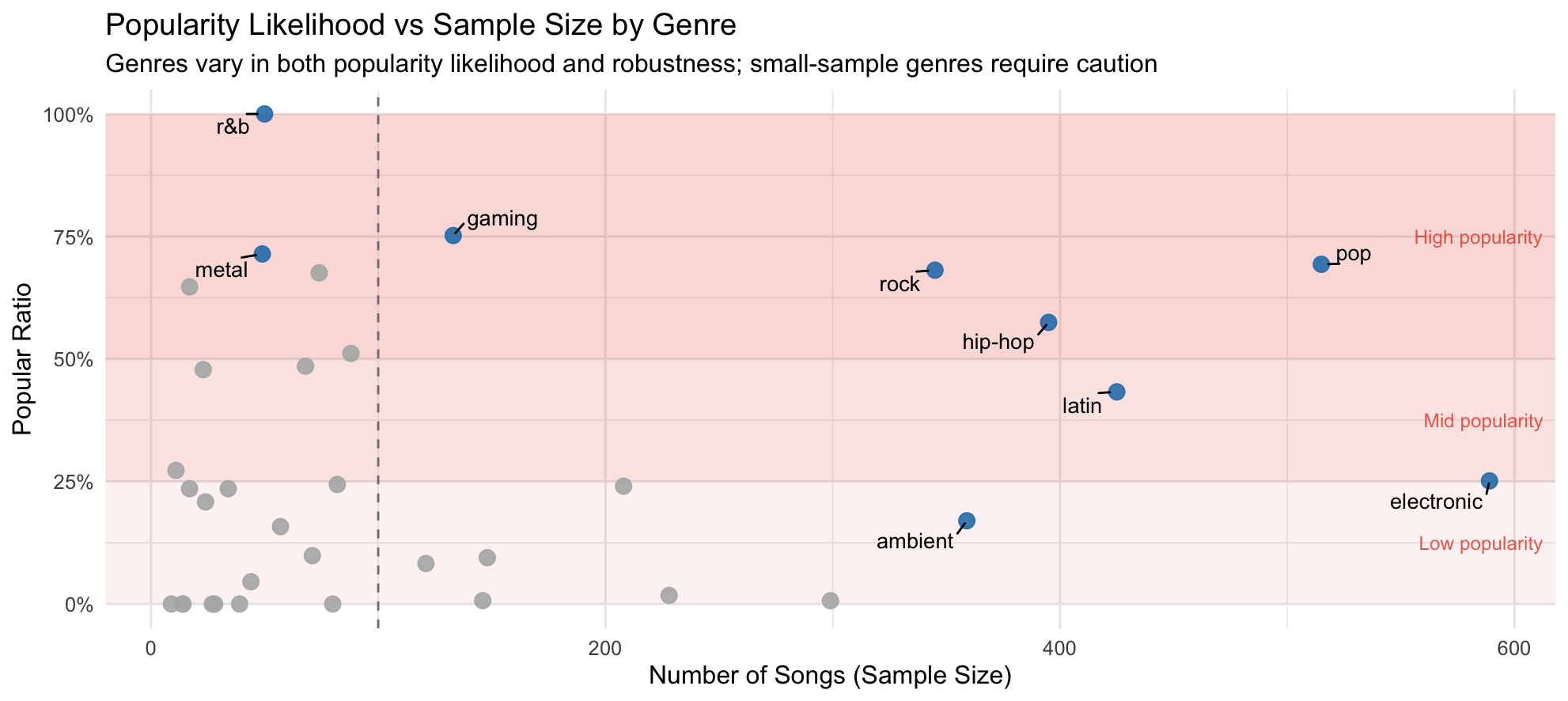
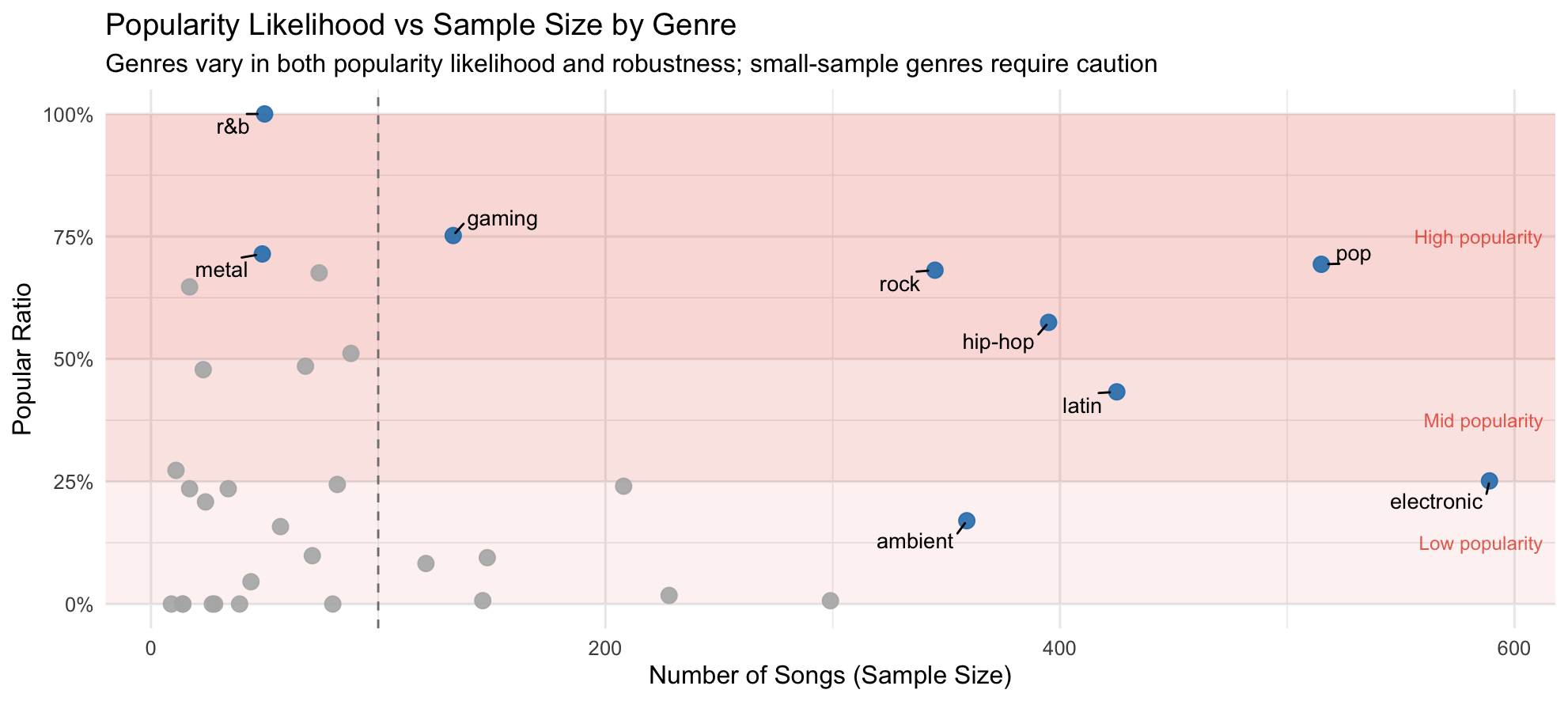
This section examines how popularity likelihood varies across genres while accounting for sample size differences. By comparing the share of popular tracks against the number of songs per genre, the analysis highlights which genres demonstrate robust popularity signals and which require cautious interpretation due to limited samples.
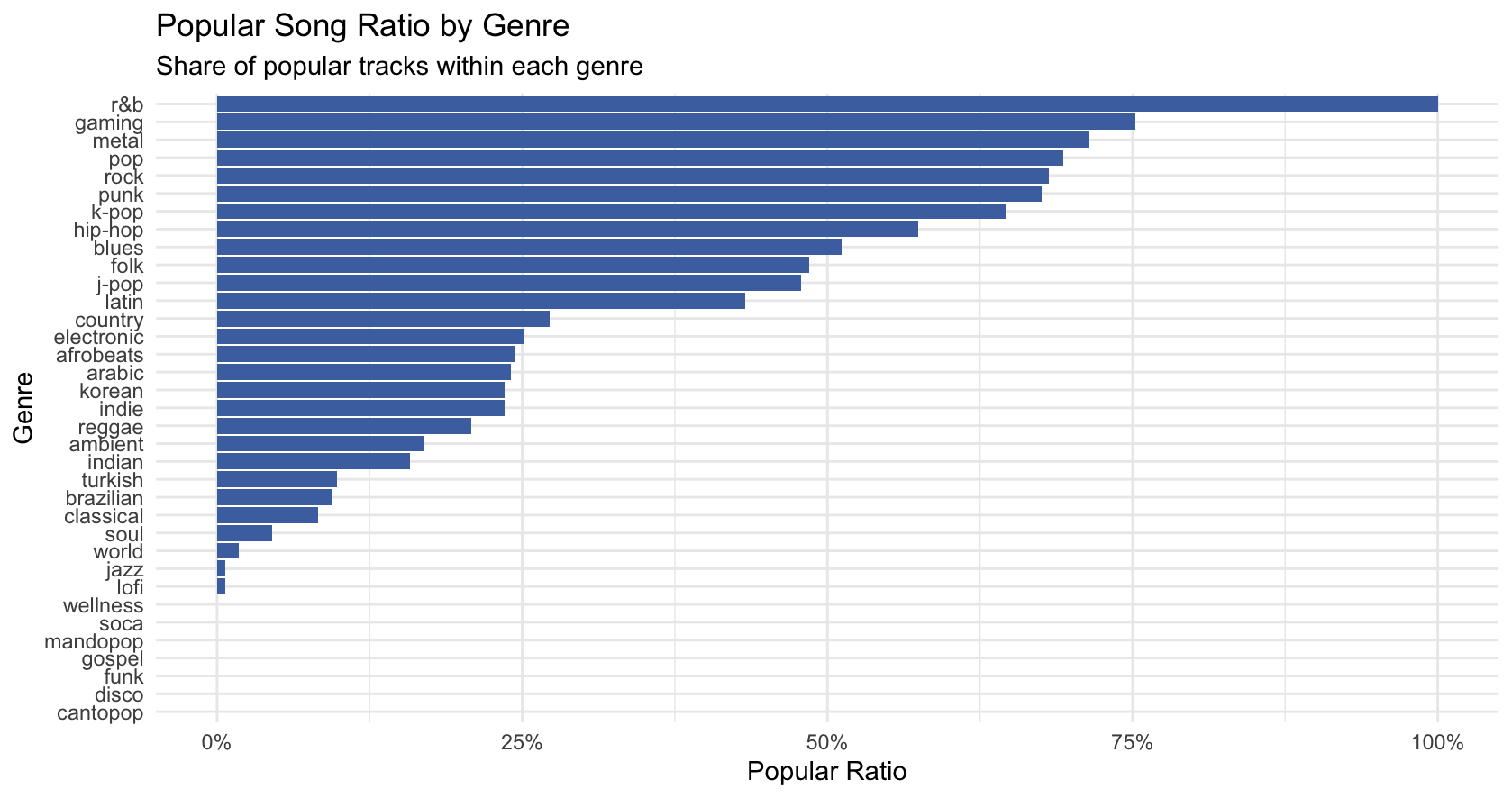
Popularity likelihood varies widely across genres, but high ratios in small-sample genres (e.g., r&b at 100%) should be interpreted cautiously.
In contrast, large-sample genres such as Pop, Rock, and Hip-hop provide more reliable evidence and motivate the within-genre validation used later.
Overall Audio Features Contrast
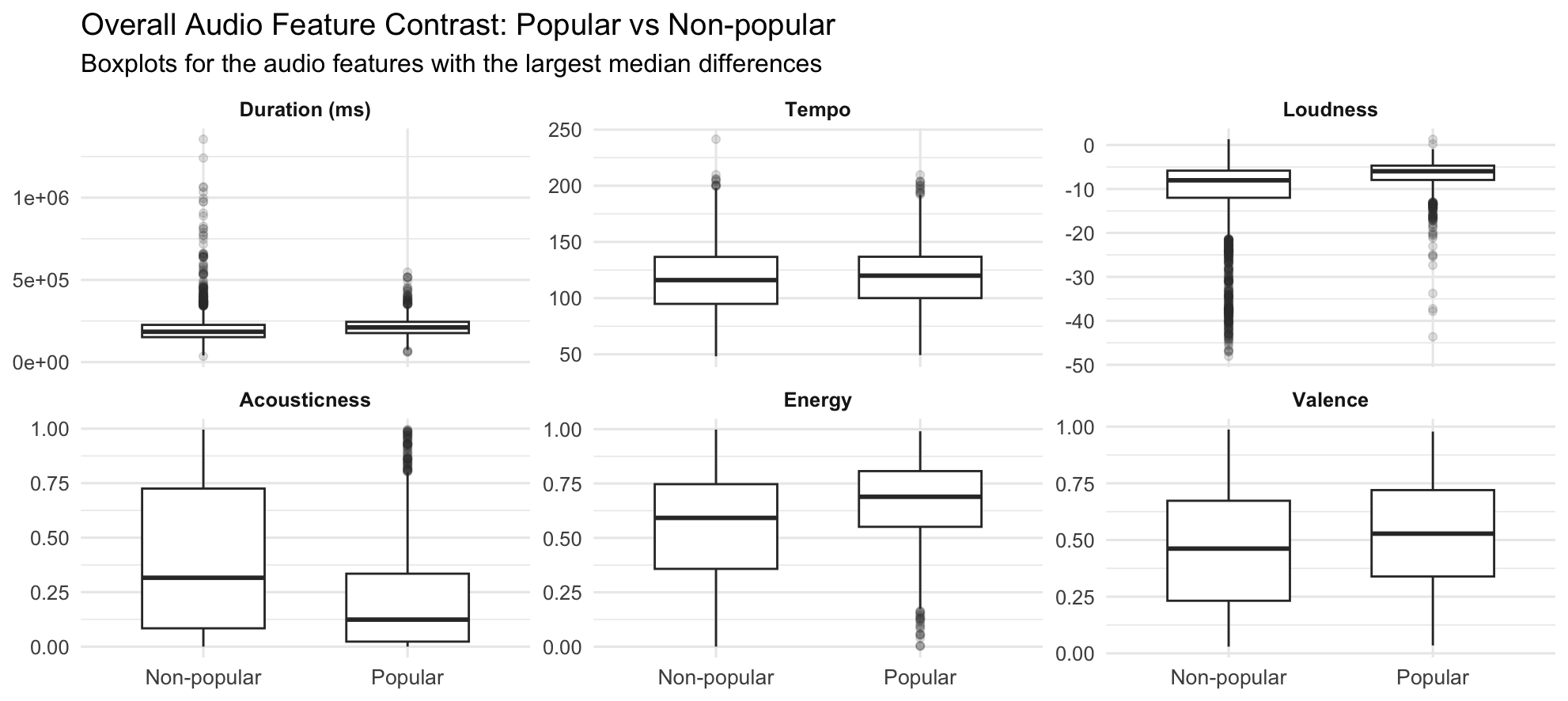
• Only the six audio features with the largest median differences are shown, reducing noise from weakly informative variables
• Boxplots are used to capture full distributional differences rather than mean-level comparisons
• Popular tracks are generally louder and more energetic, with lower acousticness, while tempo and duration show weaker separation
• These aggregate signals serve as candidates for further validation through within-genre analysis
Within-Genre Audio Feature Validation
To determine whether aggregate popularity signals reflect true within-genre effects rather than genre composition, the analysis compares popular and non-popular tracks within major genres: Pop, Rock, and Hip-hop.
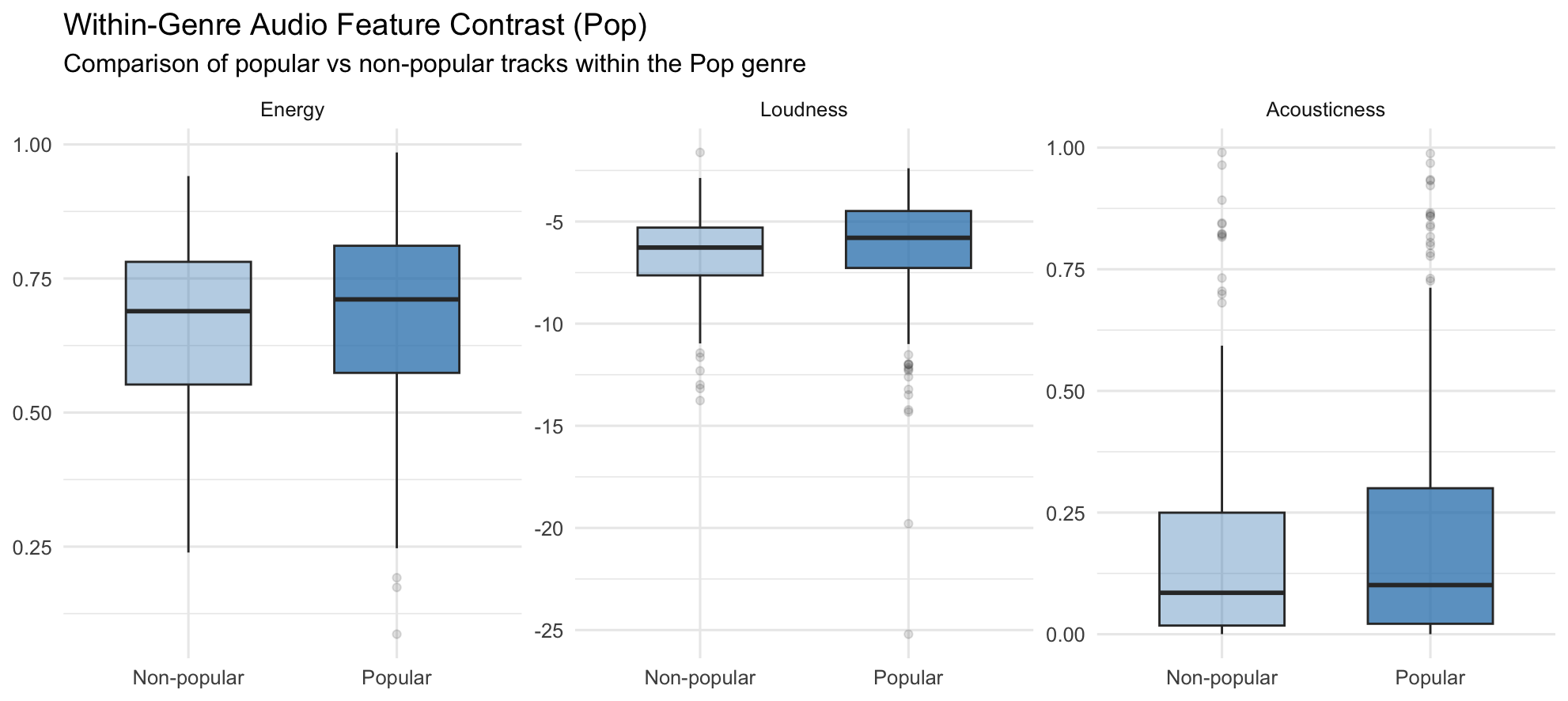
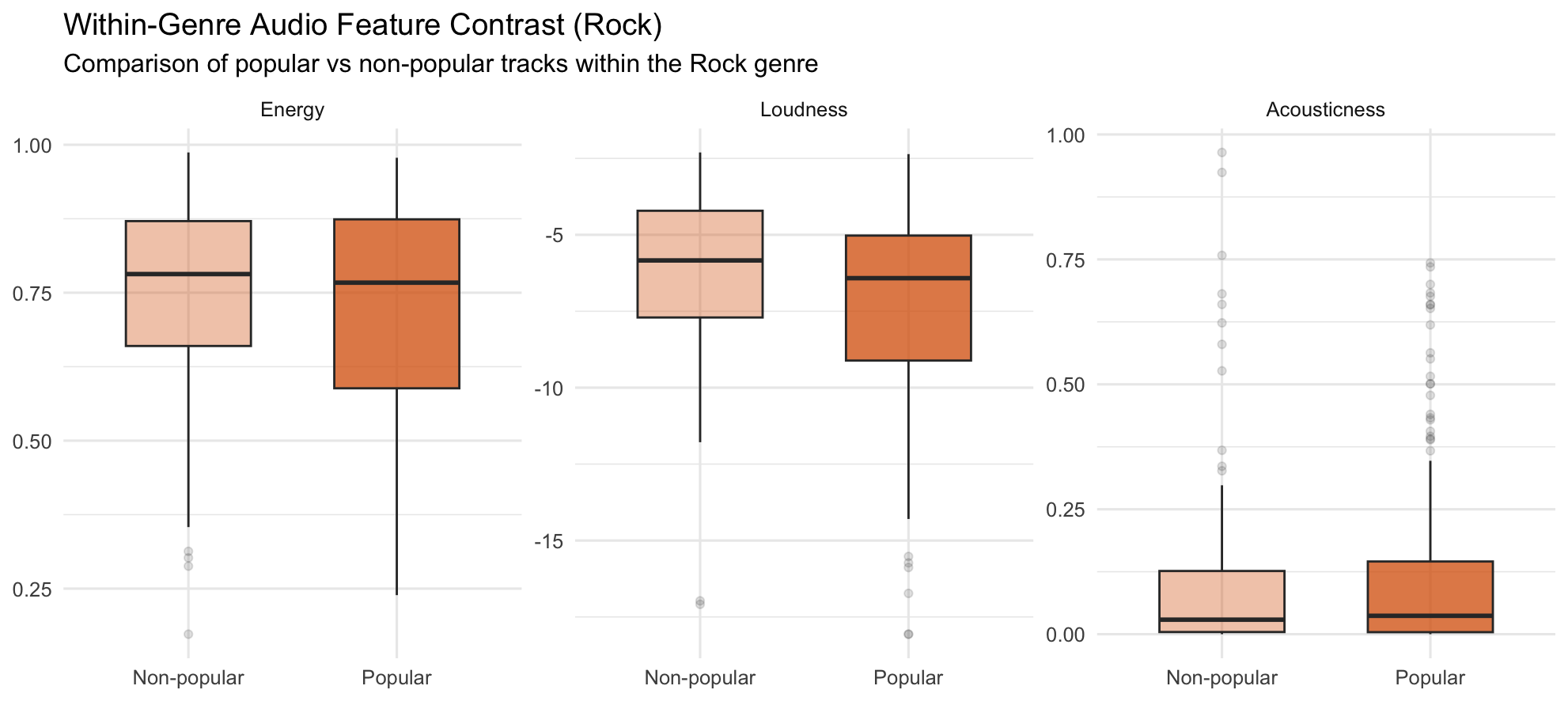
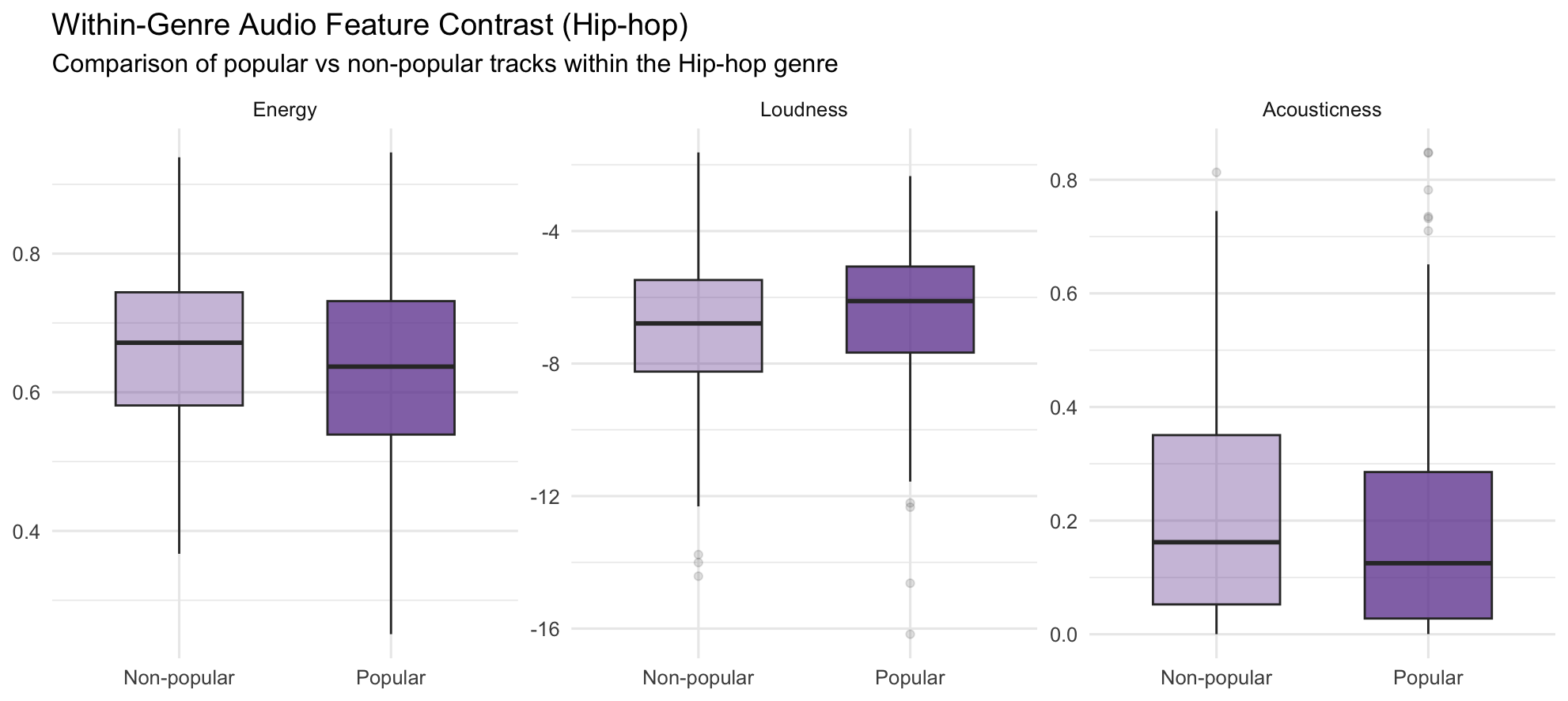
Loudness emerges as the most consistent popularity signal across genres
Energy and acousticness exhibit strong genre-dependent behavior
Popularity signals cannot be reliably inferred without genre-controlled analysis
Key Business Insights: What Signals a “Hit” Track?
Loudness is the strongest and most stable signal of popularity across genres, making it a reliable early indicator for potential hit songs.
No universal hit formula exists: audio features that correlate with popularity vary significantly by genre.
High popularity ratios can be misleading without sufficient data volume, especially in niche genres.
Audio features alone cannot fully predict success; they work best as early screening signals rather than final decision criteria.